Mountain Hiking in Japan: Alpine Adventures and Scenic Trails
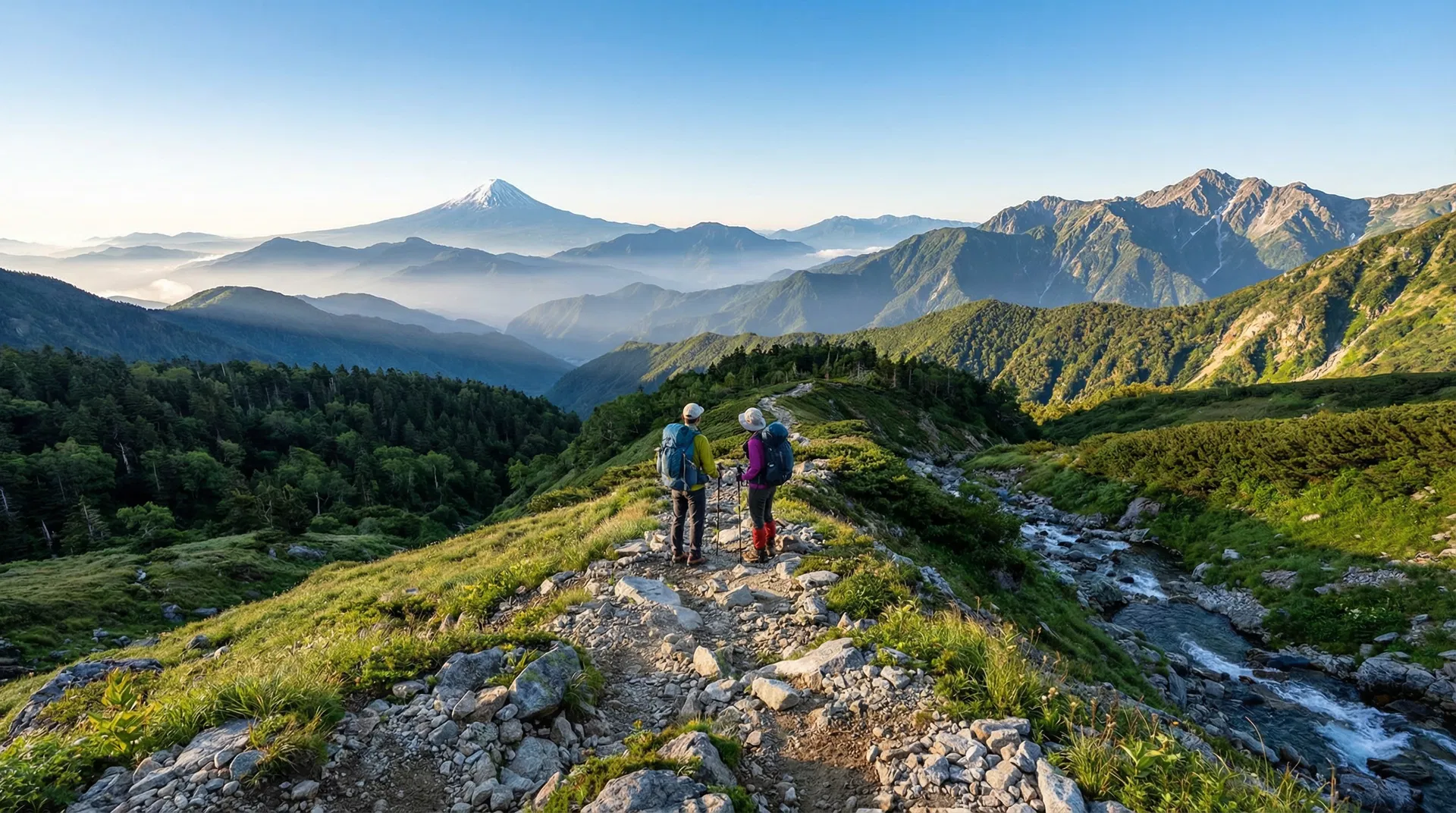
Japan's mountains offer world-class hiking experiences combining natural beauty, cultural significance, and well-maintained trails. From day hikes to multi-day alpine adventures, options suit all skill levels.
Major Mountain Ranges
Japanese Alps (Nagano/Gifu) Three mountain ranges: Northern, Central, Southern Elevation 2,000-3,000 meters Alpine meadows and pristine wilderness Excellent hiking infrastructure
Mount Fuji (Shizuoka) Japan's iconic 3,776-meter peak Multiple climbing routes Accessible to experienced hikers Spiritual and cultural significance
Kii Mountains (Wakayama/Nara) Ancient pilgrimage routes Lush forest ecosystems Kumano Kodo trail system Spiritual and historical importance
Daisetsuzan Mountains (Hokkaido) Japan's largest alpine plateau Diverse ecosystems Volcanic landscape features Remote wilderness experiences
Trail Difficulty Classifications
Japanese hiking trails are clearly marked by difficulty:
Easy (Grade 1-2) Well-maintained paths Minimal elevation gain 2-4 hour duration Suitable for all fitness levels
Moderate (Grade 3-4) Established trails with some steep sections 4-6 hour duration Requires basic fitness Some technical sections
Difficult (Grade 5-6) Challenging terrain and elevation 6+ hour duration Requires hiking experience Technical skills may be needed
Very Difficult (Grade 7-10) Alpine routes requiring mountaineering skills Multi-day expeditions Specialized equipment needed Professional guides recommended
Seasonal Hiking Conditions
Spring (April-May) Snow melting on higher elevations Wildflower blooms Variable weather conditions Shorter days limit hiking time
Summer (June-August) Optimal hiking conditions Peak season with crowded trails Hot, humid lower elevations Alpine areas cool and comfortable
Autumn (September-November) Spectacular foliage colors Stable weather patterns Comfortable temperatures Shorter daylight hours
Winter (December-February) Snow coverage on mountains Requires specialized equipment Limited trail access Avalanche risk on steep slopes
Essential Hiking Preparation
Physical Conditioning Build cardiovascular fitness Strengthen legs and core Practice with day hikes first Assess personal fitness level
Equipment and Gear Proper hiking boots with ankle support Layered clothing for temperature changes Weather-resistant jacket and pants Backpack with rain cover Navigation tools (map, compass, GPS) First aid kit and emergency supplies
Knowledge and Skills Learn trail navigation Understand weather patterns Know emergency procedures Practice Leave No Trace principles
Popular Hiking Routes
Mount Fuji Summit Trail Multiple routes from different elevations 5-10 hour summit push Mountain huts provide overnight accommodation Spiritual experience reaching summit
Kumano Kodo Pilgrimage Routes Ancient spiritual trails 3-7 day multi-day options Lush forest scenery Guesthouses and hot springs along route
Tateyama Kurobe Alpine Route Scenic mountain traverse Cable cars and ropeway sections Alpine meadows and peaks Accessible to non-technical hikers
Shirakawa-go to Takayama Multi-day mountain trek Traditional village experiences Diverse ecosystems Moderate difficulty
Safety Considerations
Weather Awareness Mountain weather changes rapidly Check forecasts regularly Turn back if conditions deteriorate Respect warning signs
Physical Limits Know your fitness level Start with easier trails Listen to your body Don't push beyond capabilities
Emergency Preparedness Carry emergency supplies Know emergency contact numbers Inform others of your route Carry communication device
Mountain Hut Accommodations
Multi-day hikes often utilize mountain huts:
Basic Facilities: Simple but clean accommodations Shared Meals: Communal dining experiences Advance Booking: Essential during peak season Reservation Requirements: Often require Japanese language skills
Wildlife and Nature
Japanese mountains support diverse wildlife:
Japanese Macaques: Mountain monkeys Japanese Serow: Alpine ungulates Alpine Flowers: Seasonal wildflower displays Forest Ecosystems: Ancient cedar and cypress forests
Japan's mountains offer transformative hiking experiences combining physical challenge, natural beauty, and cultural significance.